Itinerary
DAY 1: FLY TO KATHMANDU
You will depart the UK for the adventure of a lifetime! If you have booked flights with us (option available for Bucket Lister + trips only), we’ll provide all the information you’ll need to meet your guide. If you are arranging your own flights, have a safe journey!
DAY 2: ARRIVE IN KATHMANDU
On arrival at Tribhuvan International Airport in Kathmandu you’ll make your way to the accommodation. If you have booked transfers through us, we’ll send you the details before your trip.
You will have the afternoon to rest or explore your new surroundings.
There will be an early evening welcome meeting.
DAY 3: TRANSFER TO RAMECHHAP
In the morning, after breakfast, there will be a thorough pre-trek briefing by your trek leader to sort out any last-minute queries. We leave the hotel at 1 pm and take the winding road to Ramechhap.
Please note:
Ongoing developmental works and necessary maintenance at Kathmandu’s Tribhuvan Airport mean flights to Lukla depart from Ramechhap Airport. This step was taken by the Civil Aviation Authority of Nepal (CAAN) during the 2019 post-monsoon season and has been extended for an indefinite period. Although there are sometimes flights from Kathmandu these cannot be guaranteed, even with advanced booking.
We drive to Ramechhap during daylight hours and spend the night there. This ensures we are refreshed and can be on the first flights to Lukla in the morning, ready to start our trek.
DAY 4: FLY TO LUKLA, TREK TO PHAKDING / MONJO
We board an early morning flight to Lukla; this often ranks as one of the highlights of this trek, thanks to the stunning views it provides of the Himalayas. Lots of people also have landing at Tenzing-Hillary Airport on their bucket list – you’ll be ticking that off today!
The first stage of your trek offers some of the trek’s most enchanting rural scenery, with prayer rocks, mani walls, and quaint Sherpa settlements. The trail today descends towards Phakding and is shorter than the following days; this allows time to explore the village of Phakding and enjoy lunch. We usually settle in for the night in Phakding, however depending on the group’s energy levels and the time available, there may be the option to continue to Monjo, our alternate stop for the night.
Trekking Distance: 8.2km (approx. 3 hours of trekking)
DAY 5: TREK TO NAMCHE BAZAAR
Following a hearty breakfast, we’ll set off on a trail along the Dudh Koshi, or ‘Milk River’.
From Phakding, we’ll be following a path that navigates across three hanging bridges and ascends through charming hamlets.
At Monjo we’ll enter the Sagarmatha National Park; your group leaders and guides will manage the permits for you here while you have a hot drink or browse the shops.
The trail continues upstream along the river banks to the confluence of the Bhote Koshi and Dudh Koshi. After crossing the iconic Hillary Suspension Bridge, the trail starts ascending through pine tree forests; this last section is challenging, but the rewards are worth it. We’ll reach the distinctive horse-shoe-shaped bowl village of Namche Bazaar where we will stop overnight.
Trekking Distance: 10.9km (approx. 7 hours of trekking)
DAY 6: ACCLIMATISATION DAY AT NAMCHE BAZAAR
Day 3 of the trek is set aside for acclimatisation. We’ll take a morning walk up to the Everest View Hotel – the highest-altitude hotel in the world! This walk not only assists in adjusting your body to the altitude but also treats you to stunning views of the Everest range.
We’ll descend back to Namche Bazaar, just in time for a hearty lunch. The post-lunch schedule offers you the rest of the afternoon at your leisure.
Namche Bazaar offers plenty to explore. You can meander through its lively streets, browsing through a range of colourful shops that offer a variety of Nepalese goods, from traditional artefacts to trekking gear. Delight your taste buds with a visit to the local bakeries or enjoy a hot coffee while soaking up panoramic views.
And, if you’re up for it, you can’t miss grabbing a pint and a game of pool at the famous Irish Bar. Besides serving a good brew, this bar holds the unique distinction of being the highest Irish bar globally.
Trekking Distance: 5.4km (approx. 3 hours of trekking)
DAY 7: TREK TO TENGBOCHE
Following a quick climb at the start of the trek, the path flattens as we head towards the picturesque village of Kyamjuma. From there, we descend into the heart of the valley, reaching a charming spot beside the Dudh Koshi at 3250m, just in time for lunch.
This section of the trek offers some of the most awe-inspiring views you’ll encounter on this journey – marvel at the stunning vistas of Mount Everest, Nuptse, Lhotse, and Ama Dablam.
Following lunch, it’s time for an ambitious climb towards Tengboche. Navigating the zig-zag path might take around 2-3 hours, but once we’ve reached Tengboche, it’s time for a visit to the renowned Tengboche Monastery – the largest monastery in the Khumbu region.
We’ll stay in Tengboche overnight.
Trekking Distance: 9.6km (approx. 5 hours of trekking)
DAY 8: TREK TO DINGBOCHE
We bid farewell to Tengboche after a hearty breakfast and navigate our way down towards the Dudh Koshi River.
This section of the trek takes us through scenic rhododendron and fir forests, soaked in morning mountain mist. As we cross the bridge over the river, we’ll need to brace ourselves for a climb to the village of Pangboche.
Post lunch in Pangboche, we follow the pathway uphill to Dingboche, our destination for the day. Be sure to take in the views of Ama Dablam (‘The Matterhorn of the Himalayas’), which stands out against the rustic charm of the stone-walled fields and pastures.
At an altitude of 4410 metres, the village of Dingboche has a vibrant aura and stunning mountain views. It also boasts one of our favourite cafés – make sure you check out Café 4410!
Trekking Distance: 11km (approx. 6 hours of trekking)
DAY 9: ACCLIMATISATION DAY AT DINGBOCHE
Dingboche, also known as the ‘Summer Valley’, offers ample opportunities for your body to adjust to the altitude, vital for a successful and enjoyable trek.
Kick off your day with a nutritious breakfast, followed by a picturesque walk towards Chukung. This gentle hike serves both as an exercise to acclimatise, and an opportunity to enjoy beautiful views of the Himalayan peaks. You’ll experience panoramic views of the imposing south face of Lhotse, sweeping landscapes of Imja Tse (Island Peak), and the cascading glaciers of Ama Dablam. The overall vista of mountain peaks, glaciers, and vast rocky expanses make this walk worth every step.
Back in Dingboche, the afternoon offers time for relaxation or exploration of the local area.
Trekking Distance: 4.5km (approx. 5 hours of trekking)
DAY 10: TREK TO LOBUCHE
On leaving Dingboche, the trail climbs steeply, cutting through the initial pang of high-altitude trekking with breathtaking views of the Himalayas. You’ll progress along the lateral moraine of Khumbu Glacier, with striking views of Tawachee and Cholatse peaks keeping you company.
Midway through the day, the aim is to reach Thukla at 4620m. Here, take a moment to savour a leisurely lunch and recharge yourself for the steep trek that awaits us to Thukla Pass. Once at the pass, take some time to pay respect at the Everest Memorial, a solemn tribute to the climbers & Sherpas who have lost their lives on climbing expeditions.
Post lunch, continue the ascent, along a somewhat rough trail to the edge of the Khumbu Glacier. The Everest Base Camp trail now moves along the rocky terrain towards Lobuche, our final stop for the day.
Camouflaged among stunning peaks, Lobuche is a comforting destination after a day of intense trekking.
Trekking Distance: 7.9km (approx. 5 hours of trekking)
DAY 11: GORAK SHEP - EVEREST BASE CAMP - GORAK SHEP
Today’s the day you have been waiting for – the journey from Lobuche to Gorak Shep, and finally to Everest Base Camp.
Setting off from Lobuche, the trail continues to take you across the edge of the Khumbu Glacier, gradually ascending to the small settlement of Gorak Shep.
On reaching Gorak Shep, take a brief pause to catch your breath and grab something to eat. From here, replenished and revived, embark on the final push to Everest Base Camp.
The path here is comprised of rocky terrain and moraine, challenging yet thrilling. Tread carefully over the uneven boulders and rocks, and let the views of Pumori and other peaks help take your mind off the demanding trail.
When you finally set foot in Everest Base Camp, take a moment to admire the awe-inspiring sight of the Khumbu Icefall rolling off the South Col. Fully soak in this moment, capture pictures, and celebrate this accomplishment with your trek mates.
After absorbing the captivating views and achievements, head back to Gorak Shep. This final stretch of the day is a descent, easing the efforts of the day. Spend the night at a lodge in Gorak Shep.
Trekking Distance: 11.7km (approx. 7 hours of trekking)
DAY 12: TREK TO DZONGLA
Today offers an optional early morning ascent of Kala Patthar, the most popular vantage point in the region for capturing the magnificent form of Mount Everest in all its glory. It’s a challenging start to the day but also incredibly rewarding.
Wake up before dawn and start the climb to Kala Patthar under the star-studded sky. As you ascend, the golden rays of the rising sun begin to illuminate the snow-capped peaks. Standing atop Kala Patthar, soak up the inspiring view of Mount Everest, which appears so close it feels like you could touch it.
Once you’ve taken in this moment with photographs, return to Gorak Shep. Enjoy a well-deserved breakfast at the lodge and pack your things into your duffle bag.
Regrouped and refreshed, prepare to leave Gorak Shep and descend to Lobuche, reversing our route from day 11. We’ll then strike off on a different path and head to Dzongla for the night.
You’ll stay in a teahouse with a warm meal and a comfortable bed.
Trekking Distance: 11km (approx. 8 hours of trekking) – this does not include Kala Patthar
DAY 13: DRAGNAG VIA THE CHO LA PASS
Today we move from Dzongla to Dragnag, over the Cho La Pass; this links the glacial valleys of Cho Oyu and Everest.
The climb over the pass is challenging (over rocks, snow and ice), but non-technical, and offers superb views.
Trekking Distance: 10km (approx. 8 hours of trekking)
DAY 14: GOKYO LAKES
This is an easy but slow day due to the altitude. We arrive at Gokyo, a Sherpa settlement beside the main Gokyo Lake (Gokyo Cho) after trekking along the Ngozumpa glacier. Gokyo is typical of the high seasonal settlements used by Sherpas for farming.
This afternoon you can relax, or you can choose to trek up Gokyo Ri (5360m) for panoramic mountain views to rival Kala Patthar. The breathtaking view includes four peaks: Mt. Everest, Lhotse, Cho Oyu and Makalu, plus the turquoise Gokyo Lakes and the Ngozumba glacier.
Trekking Distance: 5km (approx. 4 hours of trekking) – not including Gokyo Ri
DAY 15: TREK TO DOLE
Wake up to stunning views of Gokyo Cho from our accommodation. After breakfast, we will descend to Dole, where we will spend the night. Along the way enjoy the excellent views of Thamserku, Cho Oyu, and Kangtega.
Trekking Distance: 13km (approx. 5 hours of trekking)
DAY 16: NAMCHE BAZAAR
From Dole we head back to Namche Bazaar for well-earned rest and refuelling at the delightful cafés and shops. The best slice of cake you will ever taste!
Trekking Distance: 12km (approx. 6 hours of trekking)
DAY 17: NAMCHE TO LUKLA
Leaving the vibrant Namche Bazaar behind, we descend towards the Dudh Koshi, navigating along the winding, rocky trail. Cross the suspension bridges, engraving the last glimpses of the Himalayan peaks in your memory.
Upon reaching Monjo, you’ll exit the Sagarmatha National Park, and continue your walk back to Phakding.
After a brief rest in Phakding, it’s a steady uphill trek back to Lukla, completing the full circle of your journey.
Trekking Distance: 11.7km (approx. 6 hours of trekking)
DAY 18: FLY FROM LUKLA TO RAMECHHAP & TRANSFER TO KATHMANDU
After an early breakfast at the lodge, we fly to Ramechhap and transfer to Kathmandu to arrive at our hotel. We have the afternoon free to rest or explore more of the city.
DAY 19: EXPLORING KATHMANDU
Today is a free day to explore Kathmandu at your leisure. Explore the bustling streets of Thamel, head to a tea house, eat freshly-cooked momos or visit one of many Buddhist temples around the city at your leisure.
Alternatively, you may choose to embark on an optional city tour, immersing yourself in the rich history and vibrant culture of this ancient city. This guided exploration includes visits to the sacred Swayambhunath, or Monkey, Temple, the historic hub of Durbar Square, the residence of the living goddess (Kumari) and the Gokarneshwar Mahadev Temple.
In the evening, there will be a farewell group meal at a local venue where you can reminisce about your shared adventure.
DAY 20: FLY BACK TO THE UK
This marks the end of our Nepali adventure...alternatively, you could continue your adventure with a 3-day add-on to Chitwan National Park!
Food & Accommodation
-
Day 1 FlightBreakfast
Lunch
Dinner
-
Day 2 3* Hotel – Twin roomBreakfast
Lunch
Dinner
-
Day 3 Safari Tents - Twin roomBreakfast
Lunch
Dinner
-
Day 4 Teahouses - Twin roomBreakfast
Lunch
Dinner
-
Day 5 Teahouses - Twin roomBreakfast
Lunch
Dinner
-
Day 6 Teahouses - Twin roomBreakfast
Lunch
Dinner
-
Day 7 Teahouses - Twin roomBreakfast
Lunch
Dinner
-
Day 8 Teahouses - Twin roomBreakfast
Lunch
Dinner
-
Day 9 Teahouses - Twin roomBreakfast
Lunch
Dinner
-
Day 10 Teahouses - Twin roomBreakfast
Lunch
Dinner
-
Day 11 Teahouses - Twin roomBreakfast
Lunch
Dinner
-
Day 12 Teahouses - Twin roomBreakfast
Lunch
Dinner
-
Day 13 Teahouses - Twin roomBreakfast
Lunch
Dinner
-
Day 14 Teahouses - Twin roomBreakfast
Lunch
Dinner
-
Day 15 Teahouses - Twin roomBreakfast
Lunch
Dinner
-
Day 16 Teahouses - Twin roomBreakfast
Lunch
Dinner
-
Day 17 Teahouses - Twin roomBreakfast
Lunch
Dinner
-
Day 18 3* Hotel – Twin roomBreakfast
Lunch
Dinner
-
Day 19 3* Hotel – Twin roomBreakfast
Lunch
Dinner
-
Day 20 FlightBreakfast
Lunch
Dinner
What’s the Food Like on Everest Base Camp & Gokyo Lakes?
Food on the Everest Base Camp Trek is surprisingly varied, comforting and designed to keep you well-fuelled for long days on the trail. While you’ll be far from urban restaurants, the teahouses and lodges along the route serve up warm, hearty meals that draw on both Nepali staples and international favourites — a welcome treat after a day of trekking.
Each evening you can expect fresh options like dal bhat (rice with lentil soup), noodles, pasta, omelettes and soups, plus plenty of snacks like dumplings (momos), samosas and toasties. Carbohydrates are the focus here — they’re what your body needs most at altitude — but you’ll also find fruit, vegetables, tea and local desserts to round things out. Guides and teahouse hosts are used to catering to trekkers’ tastes, so milder or vegetarian options are usually available on request.
If you’d like the full breakdown of what to expect at each stop, how to manage food safely at altitude, and the must-try dishes along the trail, you can read our complete guide here.
What Makes Our Trip Different?
How Difficult Is It?
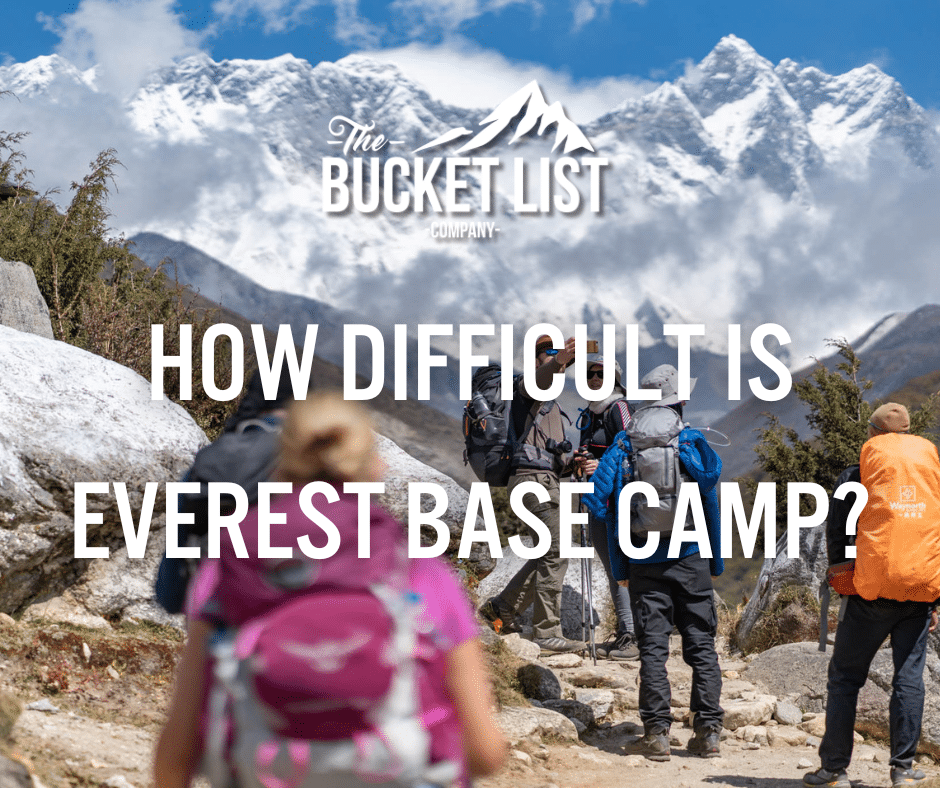
How Difficult Is the Everest Base Camp & Gokyo Lakes Trek?
The Everest Base Camp & Gokyo Lakes adventure is an incredible high-altitude trekking experience, and most of the challenge comes from altitude gain, long walking days and rugged mountain terrain rather than technical climbing. You don’t need specialist mountaineering skills, but you do need to be comfortable with sustained uphill and downhill walks, varied trail conditions, and the physical effects of trekking at altitude.
Typical days involve 4–7 hours of walking on uneven trails that can include rocky paths, loose scree, and snow-covered sections. As you climb higher, the air becomes thinner and your body has to work harder — which is exactly why the itinerary is carefully paced with acclimatisation stops and rest days built in to keep you moving steadily and safely.
With proper preparation, a sensible level of fitness, and support from experienced guides, this trek is achievable for most fit walkers who are used to long walks and hills. Your guides will monitor acclimatisation and adjust the pace to help you stay comfortable throughout.
To understand more about the challenges you’ll face — from altitude effects and distance covered each day, to the fitness levels you should aim for, check out our full guide here.
What's Included?
What’s Included on the Everest Base Camp & Gokyo Lakes trek
Your Everest Base Camp & Gokyo Lakes Trek is designed to be as seamless as possible, with all the essentials covered so you can focus on the experience.
All transport within Nepal as outlined in the itinerary (this excludes international airport arrival & departure transfers – unless added to your booking, or if you have added Group Flights to a BL+ trips)
- Internal (return) flight from Ramechhap to Lukla
All accommodation during the trek (teahouses / lodges, twin-share)
Accommodation in Kathmandu (twin-share)
All meals during the trek (breakfast, lunch and dinner)
Experienced local trekking guides and support team
Porters to carry group equipment and luggage allowance
All trekking permits and national park fees
UK Bucket List Company Leader on all BL+ departures
Support from The Bucket List Company team before and during your trip
Access to the Vamoos app with full itinerary, packing lists and key trip info
What's Not Included?
What’s not Included on the Everest Base Camp & Gokyo Lakes Trek
The following costs are not included and should be budgeted for separately:
International Flights
Flights to and from Nepal are not included in the base trip cost. These can be added on Bucket Lister Plus trips if you’d like us to arrange everything for you.
Airport Arrival & Departure transfers
These are excluded from the base cost of your trip but can be added to your booking. If you are booking Group Flights with us on a BL+ trip, then these transfers are included automatically.
Comprehensive travel insurance is compulsory. It must also cover high-altitude trekking up to 5,700m and emergency helicopter evacuation
Visa
Visa fees (if applicable) are not included.
Personal Expenses
Snacks, drinks, charging, Wi-Fi, hot showers and souvenirs
Meals Not Listed
Any meals not specified in the itinerary.
Tips
Tips are not included – trip-specific guidance will be provided.
UK Leaders on BL Trips
BL trips will not have a UK Bucket List Company Leader present.
Reviews
Frequently Asked Questions
Do I need a visa to enter Nepal?
Because entry requirements can and do change, and because we have clients of many nationalities, we always recommend checking this with your own government’s website. Be sure to allow enough time to apply for any visas or permits required; don’t leave your checks until the day before!
What vaccinations do I need?
These change, so it is important that you check with either a travel health clinic or your doctor’s surgery. You should allow plenty of time for this process, as some vaccines need multiple doses. The TravelHealthPro website is another useful source of information – https://travelhealthpro.org.uk/countries
How can I avoid roaming charges but still use my phone?
Your mobile provider might have reasonably-priced roaming add-ons, so it is worth exploring these. Or you could buy an eSim; these are often much cheaper than add-ons and are easy to activate and use. See our article for more information – https://thebucketlistcompany.co.uk/unlock-seamless-connectivity-with-esims-the-ultimate-travel-companion/
Why do you fly to Lukla from Ramechhap, and not from Kathmandu?
Due to the volume of air traffic flying in and out of Tribhuvan International Airport there are far more likely to be delays and cancellations if flying from Kathmandu to Lukla. Flights from Ramechhap to Lukla tend to be more reliable.
Do I need a trekking permit?
You will – we will ask you for any necessary supporting documents/information and arrange it for you. The permit price is included in the base cost of the trip.
Is there phone signal or Wi-Fi on this trek?
There is Wi-Fi in nearly all the tea houses, but it can be temperamental, and you are likely to be charged to access it. Purchasing a local SIM card or eSIM (so you can use your own hot spot), or a Wi-Fi Link card (this gives access to the Everest-specific network), can improve your chances of staying connected, but there are no guarantees.
How do the monthly payments work?
If you choose to pay for your trip monthly your payment plan will start the month after your booking is made, and will end a minimum of 28 days prior to departure. After deposit, the outstanding balance will be divided by the number of months available and we’ll charge this amount each month to the card of your choice. If you have a preferred date of the month for payments to be taken just let us know. If at a later date you wish to add an extra experience to your trip we can modifiy your payment plan to accommodate this.
Can you cater for different diets?
When you book you will receive a link to your portal, where you can fill in your passenger information, including dietary and medical requirements. These will be shared with our guides and providers (including airlines if you have also booked flights). Please provide this information as quickly as possible, so we can make any necessary arrangements for you.
Whilst we do our utmost to ensure your needs are met, in some locations options for very specific diets may be extremely limited; we therefore suggest bringing some suitable snacks.
If you have a severe food allergy please ensure you carry your medication at all times, and that we are made aware. We will pass this information on, but a conversation with your in-country guide on arrival will help them give you the best possible guidance regarding suitability or otherwise of foods.
If you have specific concerns we always suggest contacting us to discuss before booking.
Can I drink the tap water?
No; we would also recommend you use treated/bottled water for teeth brushing. You can get water in tea houses, but you must treat this before use (we like and use Water-to-Go bottles).